
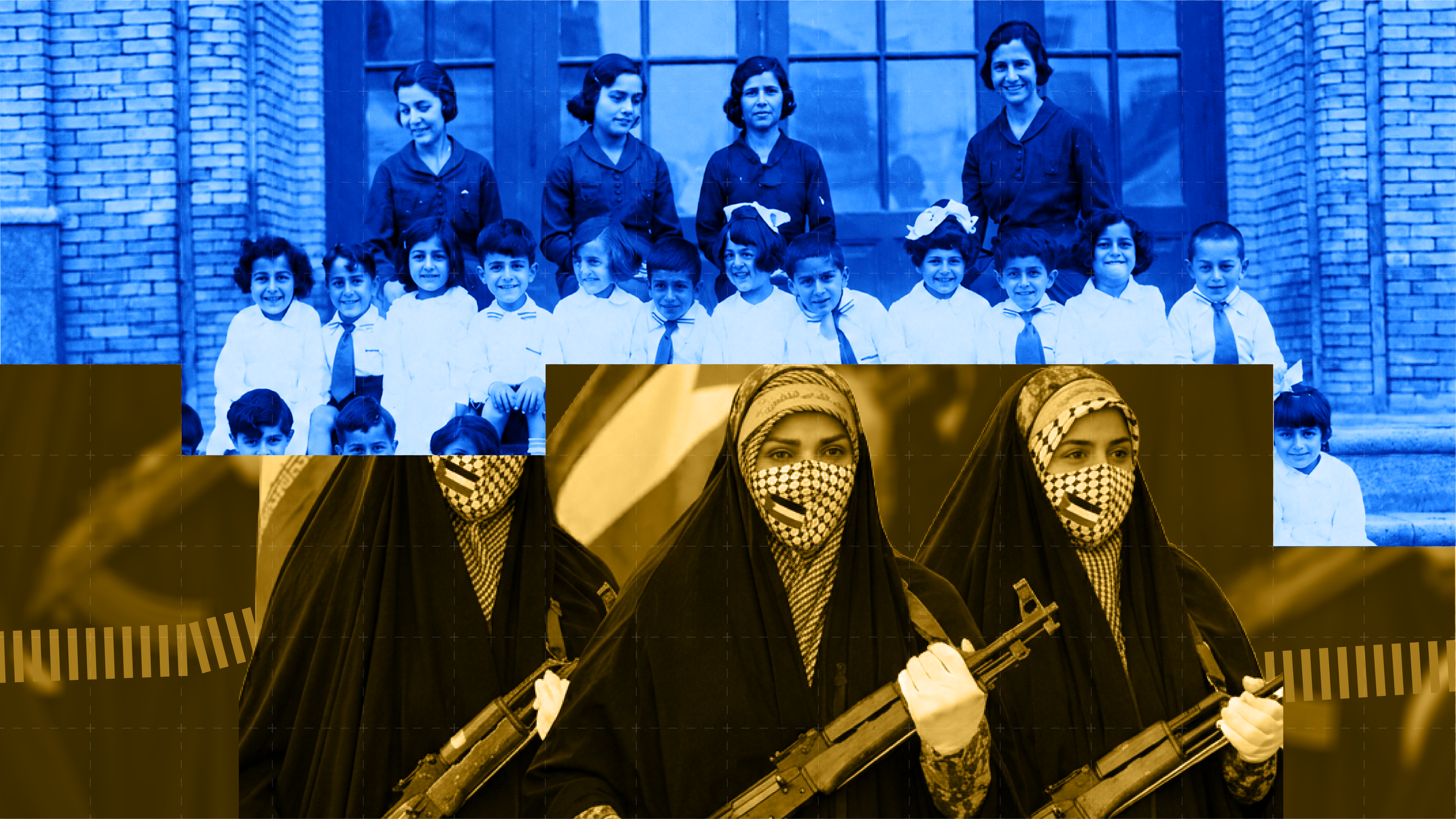
Does Islamism adapt its discourse to the historical wounds of Western societies? Taking the Islamist attack near Berlin’s Christopher Street Day as their starting point, Moones Hasnaki and Ali Bordbar Jahantighi draw on two examples: in France, they argue, the ideology invokes the memory of colonialism; in Germany, the guilt inherited from Nazism. How, then, can Muslims be protected without shielding Islamism from criticism?
The Islamist attack near Berlin’s Christopher Street Day was more than an assault on a crowd. It exposed one of the central contradictions in Europe’s confrontation with political Islam: an ideology fundamentally hostile to homosexuality, equality, religious freedom, and individual autonomy has learned to seek protection in the very language developed to defend minorities and vulnerable groups.
One woman was killed and dozens were injured near an event celebrating sexual freedom. The suspected attacker, born and raised in Germany, had previously attempted to join the Islamic State and was already known to the authorities. His background should prevent us from reducing the debate to immigration alone. Germany is not merely facing an immigration problem. It is facing a domestic Islamism problem.
The deeper question, however, is not only why individuals become radicalized. It is why European societies still struggle to name the ideology that radicalizes them.
Islamism has proved remarkably capable of adapting its public language to the historical sensitivities of each country in which it operates. Its ideological objective stays essentially the same, but its rhetoric changes according to its surroundings. In France, Islamist actors exploit the memory of colonialism. In Germany, they exploit the legacy of Nazism, racial persecution, and historical guilt. The same ideology presents itself in different disguises, carefully selecting the vocabulary most likely to disarm the society confronting it.
France: Colonialism as an Ideological Shield
France’s relationship with Islam cannot be separated from its colonial history, particularly in North Africa. The violence and injustices of that period remain an important part of French historical consciousness. A democratic society should confront them honestly.
Yet historical responsibility can also be politically instrumentalized. In France, criticism of Islamist organizations is frequently reframed as a continuation of colonial domination. Secularism becomes “state Islamophobia.” Opposition to religious separatism becomes an attack on an oppressed minority. Attempts to scrutinize Islamist networks are portrayed as collective suspicion directed against all Muslims.
This rhetorical strategy deliberately dissolves the distinction between Islam and Islamism, between Muslims as individuals and organizations pursuing a political project in the name of Islam. Once that distinction disappears, every criticism of Islamism can be presented as hostility toward Muslims themselves. The result is a peculiar inversion: Islamists, many of whom reject the principles of liberal democracy, portray themselves as defenders of a persecuted minority.
The colonial past thus becomes more than a historical subject. It becomes a political shield. Islamists do not need to answer substantive criticism if they can first discredit the critic as racist, colonialist, or hostile to Muslims.
Germany: The Weaponization of Historical Guilt
In Germany, the mechanism is different because the historical vulnerability is different.
The Federal Republic’s profound sensitivity toward racism, antisemitism, and the persecution of minorities is one of the moral achievements of post-war Germany. The determination never to repeat the crimes of National Socialism is indispensable to the country’s democratic identity.
But precisely because this sensitivity is so deeply rooted, it can be manipulated.
Criticism of political Islam is too often moved into the conceptual territory of racism. Islamist organizations present themselves primarily as representatives of a discriminated minority, while the ideological content of their politics becomes secondary.
This confusion is politically disastrous. Islamism, however, is not an ethnicity and not an immutable personal characteristic. It is a political ideology. Like every other ideology, it must remain open to scrutiny, criticism, and democratic resistance. Treating criticism of Islamism as inherently suspect does not protect Muslims.
Both mechanisms produce the same casualty. The term “Islamophobia” is stretched so far that it no longer separates hatred of Muslims from legitimate criticism of Islamist doctrine. But Muslims must be protected as individuals; Islamism, as a political ideology, must not. Blurring the two abandons the Muslims already resisting Islamist coercion in their own families and communities, and hands the most reactionary voices an authority they have not earned: the right to speak for everyone with a Muslim background. Liberal Muslims, secular and former Muslims, women resisting religious coercion, and refugees from Islamist regimes are ignored, because they do not fit the narrative of a homogeneous community represented by its loudest ideologues.
Iran: When Islamism Captured the State
For Iranians, this is not an abstract debate.
Political Islam did not begin in 1979. The Muslim Brotherhood had been founded decades earlier. Sayyid Qutb had developed an influential revolutionary doctrine built around the rejection of supposedly un-Islamic society and government. Ruhollah Khomeini had already articulated his theory of velayat-e faqih, the rule of the Islamic law.
But the Iranian Revolution marked a decisive historical turning point. For the first time in the modern era, a revolutionary Islamist movement seized lasting control of a major state and began systematically transforming its laws, institutions, education, and culture according to its conception of Islam and Sharia.
Many Iranians who supported the revolution did not understand what an Islamic Republic would mean in practice. The project had never governed Iran before. Its promises could therefore remain deliberately vague: justice, independence, freedom, and government by the virtuous. Only after the seizure of power did those abstractions acquire their concrete meaning, compulsory veiling, religious discrimination, censorship, executions, ideological courts, and the subordination of popular sovereignty to clerical rule.
Islamists did not overthrow the existing order alone. They were assisted by large sections of the Iranian left, which regarded the monarchy, capitalism, the West, and “imperialism” as the principal enemies. Despite their profound ideological differences, Islamists and Marxists found a common language in revolutionary anti-Westernism.
That language concealed what they were opposing. Under the Pahlavis, Iran was modernizing rapidly: public education expanded beyond the traditional religious schools, girls gained access to schooling, women gained the vote, and land reform challenged the power of large landowners. These reforms had earlier roots in Iran’s constitutional movement, and they did not make the monarchy a liberal democracy. But they were moving Iranian society toward wider participation and a more secular public life. The court, for all its political faults, also remained a powerful guardian of Iranian national identity and liberal values.
The anti-Shah left and the Islamists disagreed about the society they wanted to build. They nevertheless shared a hostility toward much of this modernization, toward liberal individual rights, and toward a national identity that might command loyalty beyond their respective ideologies. Islamists understood that the language of the left had become the language of revolution. They gave it an Islamic vocabulary: where Marxists invoked the proletariat, Islamist invoked the mostazafin, the oppressed and dispossessed, understood not as a single economic class but as those the Islamic revolution claimed to defend. Where the left denounced imperialism, he denounced estekbar, the arrogance of domineering powers. He called the Shah’s government taghut: a tyrannical authority whose rule defied God.
These were not merely different words for the same programme. The Marxist internationalist imagined solidarity and, for some, revolution across national borders in the name of class. Khomeini sought to rally Muslims across those borders in the name of Islam. Both could treat attachment to Iran as secondary to a supposedly higher collective mission. An internationalist in the Tudeh Party and an Islamist following Khomeini could agree that the nation should not be the final object of political loyalty. They would discover only after victory how violently they disagreed about what should replace it.
The common language extended to national history itself. Sections of the revolutionary left dismissed national history as royal propaganda, bourgeois nationalism, or an instrument of Western-backed reaction, and the monarchy’s bond to ancient Iranian symbols undoubtedly invited such criticism.
Here lay the opening that Islamism exploited. Iranians had never forgotten their pre-Islamic roots, their national epic, or Ferdowsi; they took pride in that inheritance, which lived so naturally in the collective mind that it felt ordinary and self-evident. Precisely because it was so taken for granted, Islamism could turn against it. Rather than let this national pride stand, it worked to recast attachment to Iran’s own culture as something backward and base. In its place, Islamism reached for the one framework that also felt native to ordinary people—Shi’a Islam—and reworked it into something new and political. It found willing intermediaries among leftist intellectuals who had already begun to fuse socialism with Islam. Khosrow Golsorkhi, a Marxist-Leninist poet tried for an alleged plot against the crown prince, declared that he had first sought social justice in the school of Islam and only then arrived at socialism. With the help of such figures, Islamism could sell a narrative that ran against the deeper culture of the Iranian people themselves, carried by false promises of justice and liberation and a message that is new and strikingly different often sells more easily than a familiar one. On this borrowed ground, Islamism made itself acceptable and rode a broad coalition to power.
Their alliance was tactical, but its consequences were historic. The leftists who had helped destroy the old order soon discovered that they had not entered an equal alliance. Once Khomeini and his followers consolidated power, their former partners became unnecessary. Left-wing organizations were suppressed. Their members were imprisoned, driven underground, forced into exile, and, in many cases, executed.
The alliance followed a pattern that Europe should understand: Islamists cooperate with the left when both are struggling against a liberal or established order. But Islamism does not share the left’s ultimate vision of emancipation. It regards progressive allies as tactically useful and ultimately disposable.
Iran therefore offers more than a warning about religious dictatorship. It demonstrates how an ideological movement can conceal the full meaning of its programme, exploit the grievances and vocabulary of other political forces, and eliminate its allies once it possesses sufficient power.
Protecting Muslims Without Protecting Islamism
France and Germany face different historical burdens. Islamists have learned to exploit both.
In France, they can present political Islam as resistance to colonial domination. In Germany, they can portray opposition to Islamism as another form of racial exclusion. In both cases, the objective is to make ideological criticism morally suspect before it can even begin. Europe must refuse this manipulation.
The alternative is not hostility toward Muslims. On the contrary, the clearest opposition to Islamism often comes from people with Muslim backgrounds: Iranian resisting Islamic republic, Arab intellectuals defending secular government, Iraqis, Afghan and Syrians seeking a national state rather than Islamist states, Kurdish activists, former Muslims, religious reformers, and refugees who have personally experienced Islamist rule.
Their experience teaches a distinction that Europe urgently needs to recover: Muslims are human beings with individual rights; Islamism is an ideology with political ambitions. The former shall be protected. The latter must be confronted.
A liberal democracy should never judge citizens according to their ancestry or religion. But neither should it grant an ideology immunity from criticism because that ideology claims to represent a minority. Universal rights mean little if they are defended only against politically convenient enemies.
The attack in Berlin should therefore become more than another occasion for mourning followed by silence. It should force Europe to examine not only the extremists already known to its security services, but also the intellectual weakness that prevents it from recognizing the ideology before violence occurs.
Islamism speaks the language most useful to its surroundings. In Paris, it invokes colonialism. In Berlin, it invokes racism and historical guilt. In Tehran, it once promised liberation from tyranny and foreign domination.
The vocabulary changes. The political project does not.